


(Mounting Magnet)
Hard Ferrite Pot Magnet
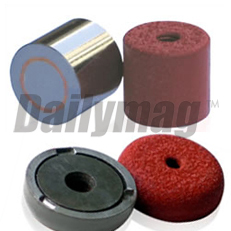
(Mounting Magnet)
AlNiCo Pot Magnet

What is pot magnets (Mounting Magnet)?
We can design and manufacture A Wide Range of Pot Magnets according to clients requirements.
Pot magnets (Mounting Magnets) are made up of magnets (NdFeB, SmCo, AlNiCo or Hard Ferrite) and other spare parts, such as metal, plastic, rubber and other components. Sometimes Pot magnets can meet some special requirements while a single magnet can not do. In the meantime, using pot magnets can save more cost than just using magnets and gain the same purpose.
Pot Magnets (Mounting Magnets) are often used as tools for various activities in workshops and in industry. They can be used for holding workpieces whilst welding, cutting, milling or drilling etc. Because of the lack of moving parts and the robust construction of pot magnets, the life is unlimited and no maintenance is required. Just keeping the pole surface clean guarantee reliable operation and a long life.
How to choose a pot magnet?
The basic principle of the holding or pot magnet is to direct and concentrate the flux from both magnetic poles to one active face. This is usually achieved with steel pole pieces or a steel-backing cup.
The standard selection can be broken down into three material types and there is a great variety of systems available. The following data should act as a simple guide:
1) Rare Earth Samarium & Neodymium, pots and assemblies can offer up to eleven times the performance of a Ferrite system in a comparable size. Applications tend to be specialized engineering projects where performance and available space are key factors. Maximum operating temperatures are +60°C for the Neodymium and +150°C - +250°C for the Samarium depending on the design configuration.
2) Sintered Ferrite, this material offers a good performance from an inexpensive magnet, however, they tend to be bulky and are not always suitable where space is an important factor. The steel parts are plated & the Ferrite is inert thus corrosion is limited. Maximum operating temperature is +120 °C.
3) Cast AlNiCo, offers a better holding force than Ferrite systems and is the only pot magnet that can be heated to extreme temperatures. However, the high cost of the Cobalt content in the cast magnet makes the price prohibitive unless the application requires temperatures over +120°C up to a maximum of +500°C.
When considering your selection, please be aware of the following factors: The stated Kg Pull (holding/gripping force) is based on the magnets retaining force against a direct pull when offered to a clean ground mild steel surface with a minimum thickness of 8mm. Painted or un-ground surfaces will reduce this force, assemblies working in shear will support approximately 1/3 of the stated value.